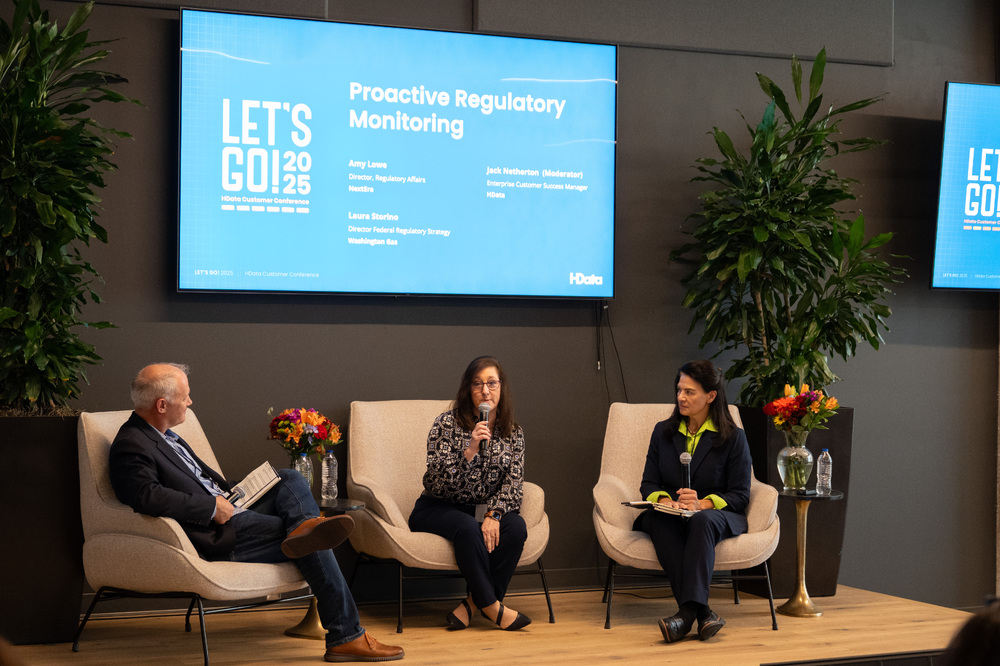
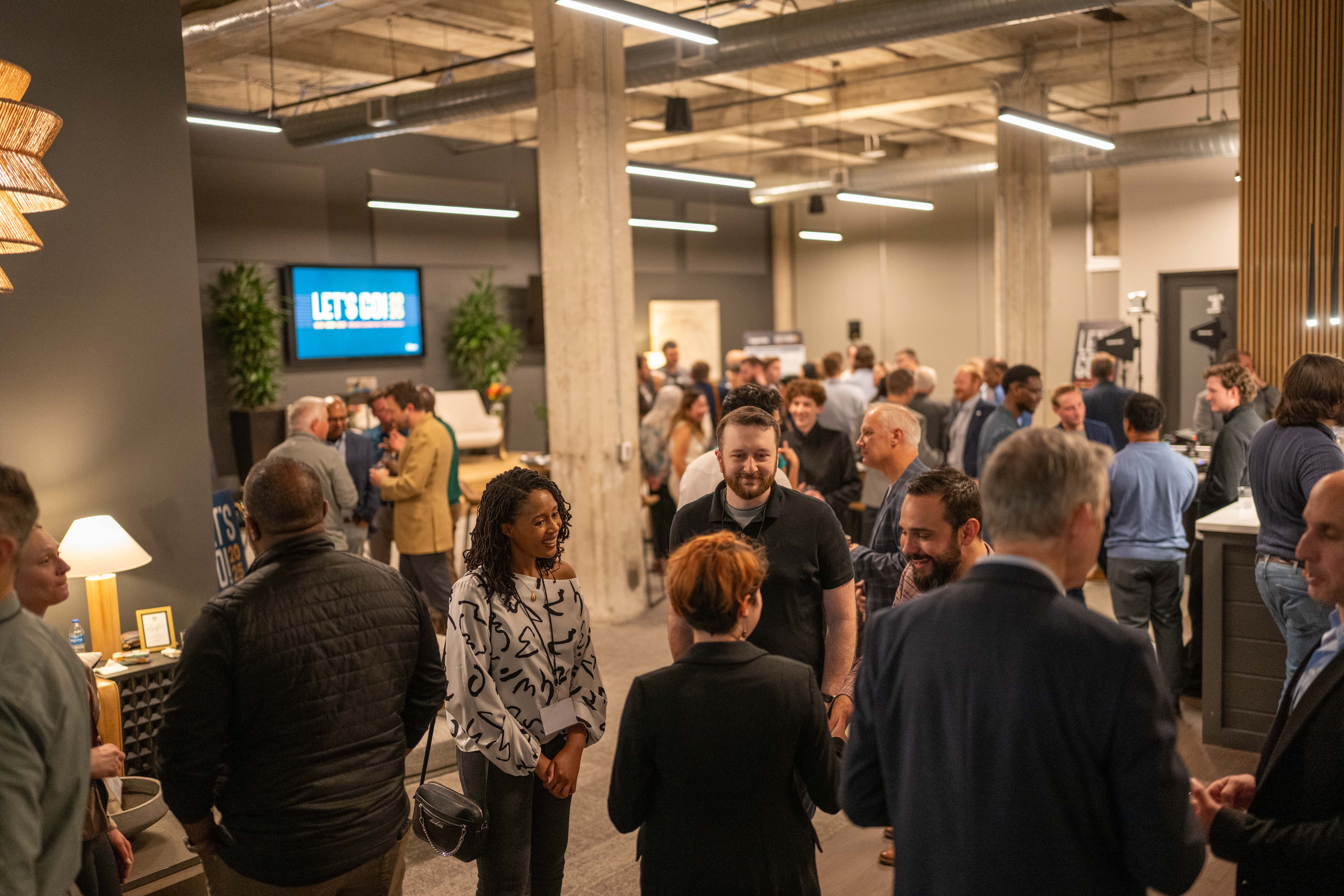
8:00 | Breakfast & Networking
Breakfast available for all attendees. HData team on hand for questions and support.
9:00 | Opening Remarks
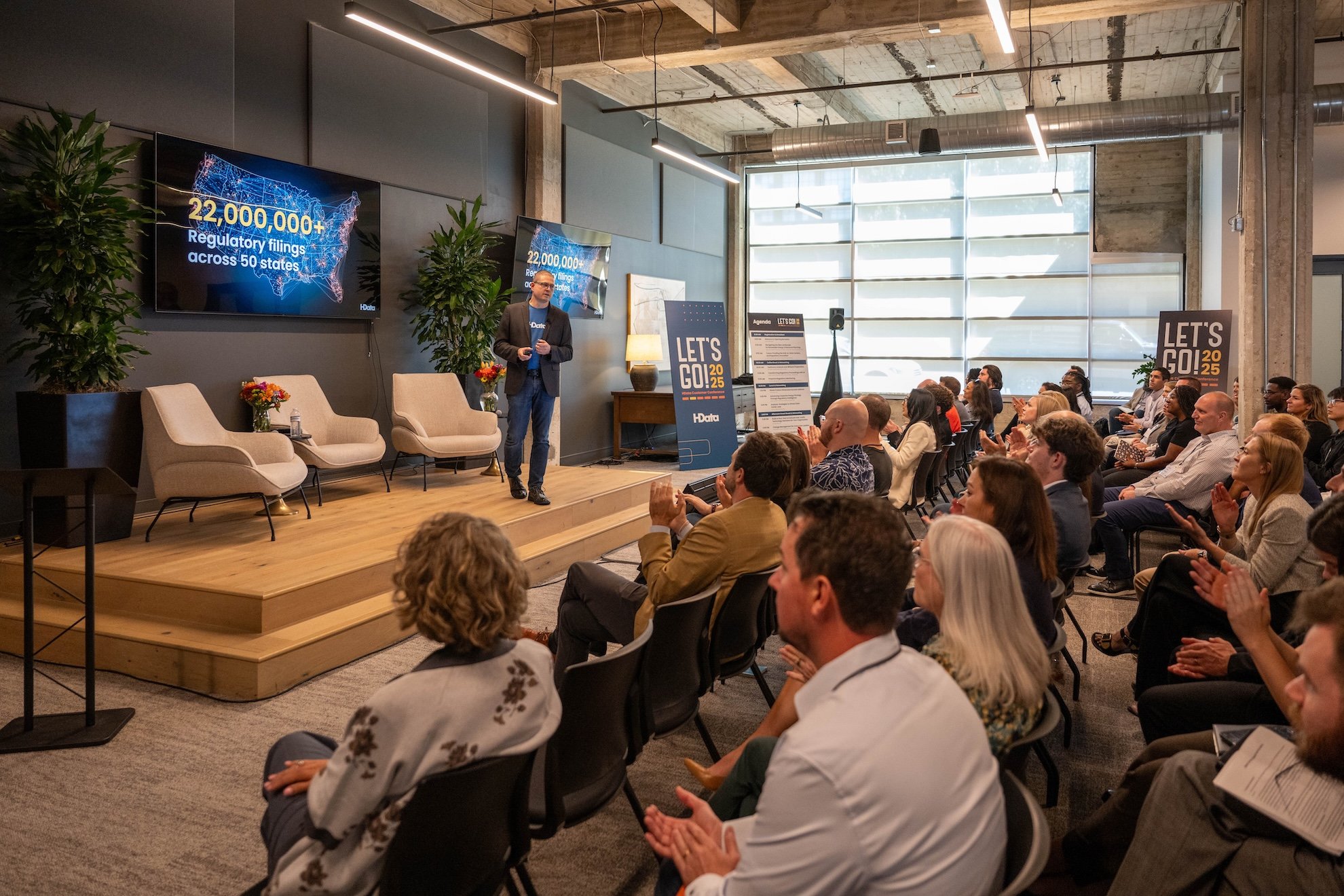
HData CEO and Co-founder Hudson Hollister will welcome attendees and share HData's vision and objectives for gathering energy leaders and regulatory innovators at the Let's Go! event.
9:15 | Large Load Impacts to Grid Planning, Cost Allocation, and Regulatory Frameworks
Data centers and large industrial loads are the fastest-growing demand category on the grid, and the regulatory frameworks governing their connection, cost allocation, and oversight were not designed for them. New large-load tariff proposals, co-location arrangements, and behind-the-meter generation agreements are emerging at the state level, while the FERC's large load interconnection rulemaking is pushing toward new federal rules on a compressed timeline. This panel will examine how interconnection priority and cost allocation should work for large new entrants, who bears stranded-asset risk if load projections do not materialize, what data transparency obligations should apply to customers whose demand can reshape a service territory overnight, and what the FERC rulemaking means for utilities, regulators, developers, and large load customers navigating federal and state proceedings simultaneously.
10:00 | Turning Regulatory Data Into Benchmarking Intelligence
Benchmarking and analytics teams field a regular stream of leadership requests for cross-utility comparisons on capital spending, rate trajectories, clean energy progress, and regulatory outcomes, all of which require pulling data from filings scattered across dozens of jurisdictions. This session will show how HData helps teams respond to these requests efficiently and with thorough analysis. Attendees will learn practical examples from practitioners who have used benchmarking intelligence to identify patterns across peer utilities and translate those insights into targeted recommendations.
10:30 | Coffee & Networking Break
Coffee and snacks on hand while attendees connect. HData staff available for questions and support.
10:50 | What the Next Congress Will Mean for the Future of the Grid
With the upcoming midterm elections, the energy industry is on the verge of a federal policy landscape that could shift significantly depending on who controls Congress next year. This conversation will cover federal issues with significant, direct impacts to the energy sector. We'll discuss the potential future of permitting reform legislation, the downstream effects of the One Big Beautiful Bill, the trajectory of rate affordability as a defining political issue, the FERC large load order, and what the election outcomes will mean for transmission investment, interconnection reform, and renewable energy through 2028. Attendees will leave with an assessment of the legislative scenarios ahead and a framework for planning through the uncertainty.
11:35 | HData Product Showcase
What new capabilities and products is HData working on? What research and development initiatives are occurring to stay at the forefront of AI and regulated energy applications? HData's Chief Product & Technology Officer will provide attendees with a preview of what's coming next to the HData platform.
12:10 | Lunch & Networking Break
Lunch served. HData team available for questions and support.
1:15 | Colorado's Energy Regulatory Landscape: Five Issues the Whole Country Is Watching
Colorado has emerged as one of the country's most closely watched states for energy regulatory innovation, with a set of interconnected developments that are drawing national attention. This session brings together four institutions at the center of that work to share how Colorado is approaching some of the most consequential questions in energy regulation today. The conversation will span five areas where Colorado's experience is generating lessons for the rest of the country: a recently completed reauthorization of the PUC, a comprehensive new performance-based regulation framework, a state transmission authority model that is being studied and replicated across the west, a wildfire mitigation framework built in the wake of the Marshall Fire, and the challenge of maintaining rate affordability while managing simultaneous investment in grid modernization, clean energy, and infrastructure for large new loads. These are not uniquely Colorado challenges, as every state, utility, and regulator in the country is navigating some version of the same terrain, and Colorado's experience offers a valuable roadmap.
2:00 | How a State Commission Uses AI to Streamline Regulatory Review
Regulatory work at a state commission goes far beyond reviewing a single docket. It means mining legal precedent, benchmarking policy across dozens of jurisdictions, and tracing decades-old infrastructure records, all under tight timelines. This session shares how the Pennsylvania Public Utility Commission has adopted HData organization-wide to take on this range of work. Presenters will also dig into a harder question raised by broader adoption: How much AI is too much? The session closes with the practical guardrails the Commission uses to walk that line, distinguishing appropriate assistance from overreach, while still doing more with less
2:30 | Coffee & Networking Break
Coffee and snacks on hand while attendees connect. HData staff available for questions and support.
2:50 | AI Lessons from Advisory Teams Supporting the Energy Sector
Nearly every organization in regulated energy leans on specialized expertise at some point for help with strategy or execution. The firms providing that expertise often manage an even wider footprint of jurisdictions, filings, and deadlines than any single client does. This session brings together advisory firms tackling that challenge from different angles, including rate case preparation and expert testimony development, tracking regulatory and environmental compliance across the many jurisdictions, and staying current with legislative and regulatory developments to ground policy and stakeholder work in the latest filings. Whether you work inside a utility, a commission, or an advisory firm yourself, you'll walk away with practical techniques for using AI to cover more ground, respond faster, and bring sharper analysis to every deliverable.
3:25 | Grid Modernization Models and Incentives Shaping the Future of Infrastructure
Utilities are committing billions of dollars to grid modernization, but the regulatory frameworks governing how those investments are reviewed, approved, and recovered in rates were designed for a simpler era of capital planning. A growing range of technologies including battery storage, demand response, grid-enhancing technologies, and distributed solar can each serve as non-wires alternatives that allow utilities to defer or avoid costly infrastructure upgrades entirely, and stakeholders are increasingly expecting utilities to demonstrate they have weighed these options in their planning processes. This panel will examine how utilities are approaching technology and infrastructure planning, how commissions are evaluating trade-offs in proceedings, and what rate design frameworks are emerging as durable models for managing the tension between timely investment recovery and rate affordability.
4:10 | Closing Remarks
HData CEO and Co-founder Hudson Hollister will summarize the day's themes and learnings as attendees prepare to depart from Denver or join us for a casual evening reception.























-1.jpg?width=1000&height=666&name=HData_Wednesday_11%20(1)-1.jpg)
-1.jpg?width=1000&height=666&name=HData_Wednesday_09%20(1)-1.jpg)

-1.jpg?width=1000&height=666&name=HData_Wednesday_13%20(1)-1.jpg)